
The Regions PlayDash Chooses to Offer
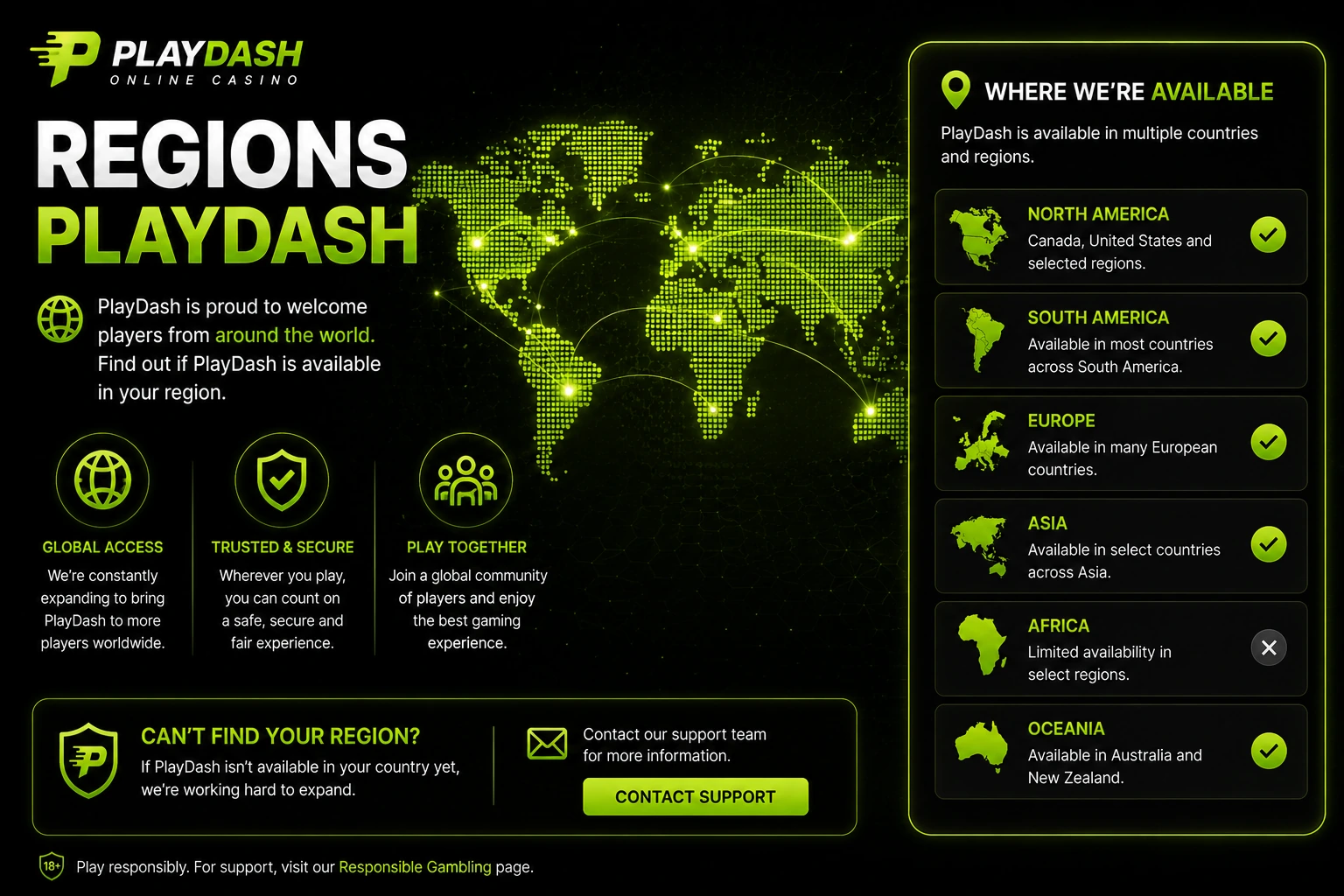
The operator has a set of markets where the platform is offered officially. The two points below cover them.
The Handful of Accepted Markets
By public data, the operator works with Malaysia, Singapore and Thailand — the brand’s three target markets, and no others on the open side:
- Malaysia
- Singapore
- Thailand
A key point sits underneath that. Working with a market is not the same as being legal in your country; it is the operator’s business choice, not a legal permission for the player. The distinction matters, because the two are easy to blur.
Separate Localised Editions per Language
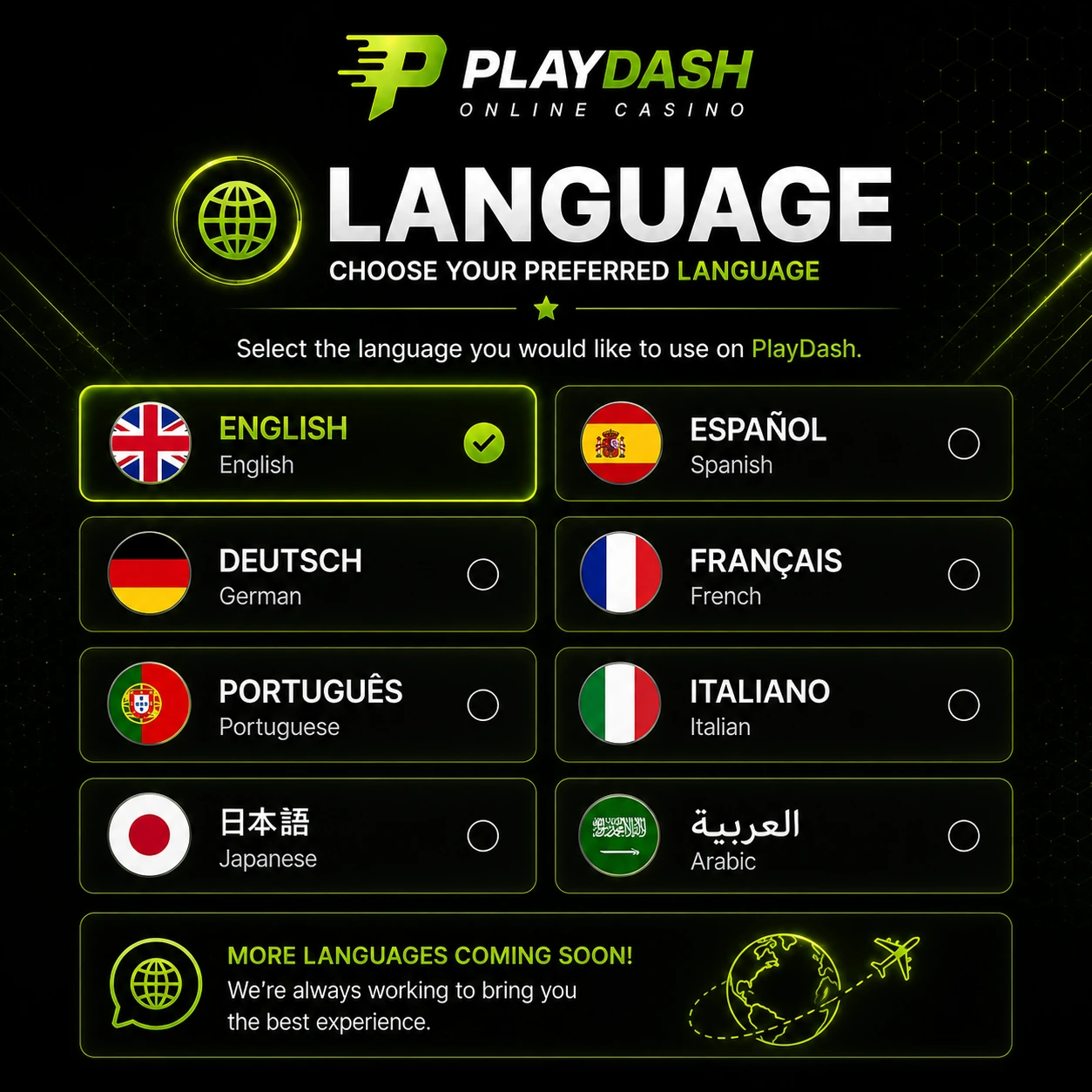
The operator runs separate localised editions for different languages — an English and Chinese edition and a Thai one, for example. The interface and language differ by market, while the brand’s rules stay common across them. What changes with the edition is presentation, not the underlying terms, so the rules read the same wherever you land. For a Malaysian reader the practical effect is small — the language and layout are tuned to the market, while the licence, the limits and the verification rules are the brand’s own and do not shift between editions.
Countries Barred From Registering
There are countries where the operator does not accept accounts. The detail is below.
Countries That Cannot Register at All
By public data, the platform does not accept players from a set of countries:
- England, Scotland, Wales and Northern Ireland
- Russia
- India
- The United States
The reasons, in general terms, are regulatory limits and the operator’s own policy, not a stance on particular players. The list can change, so it is worth confirming on the official site rather than assuming last month’s position still holds, since a country’s status can shift with regulation.
| Group | Countries |
| Served markets | Malaysia, Singapore, Thailand |
| Not accepted | England, Scotland, Wales, N. Ireland, Russia, India, USA |
| Wider verification list | Broader still — does not match the served set |
The Reach and Limits of the Anjouan Licence
An offshore licence sets the frame for the operator’s activity, but it does not legalise play in the reader’s country. The detail is below.
A Foreign Licence Grants No Local Right to Play
The Anjouan licence, number ALSI-202410062-FI2, lets the operator run its business under that jurisdiction, but it is not a local permit and does not make play lawful where online gambling is restricted. Responsibility for local legality rests with the player, and how the law applies to an individual is a question for a qualified local professional, not for a page like this one. Nothing here is legal advice. The distinction is worth holding onto, because a regulated operator and a game that is lawful for you to play are two separate things, and the licence answers only the first of them.
Why the Verification List Reaches Wider
The list of countries in verification and anti-money-laundering checks is wider than the availability list, and the two are easy to confuse. The detail is below.
Why the AML List Is Not the Availability List
The list of countries used in KYC and AML procedures is there for risk control, and it does not match the set of markets where the platform is offered. A country appearing on one list does not mean it appears on the other, so the two must not be mixed. This is exactly how a player can clear sign-up in a served market and still meet a refusal at the verification stage, where the wider list applies.
| List | What it decides | Where it bites |
| Served markets | Where accounts are offered | At sign-up |
| Barred countries | Who cannot register at all | At sign-up |
| Verification list | Who clears an identity check | At the payout stage |
Trips, Relocation, and Getting Around Blocks
Travel, moving country, and attempts to get around a block all change the picture and carry risk. The detail is below.
Using a VPN From Abroad and the Cost of It
Put honestly, accessing the platform from abroad or using a VPN to get around geo-restrictions breaks the operator’s terms and can lead to an account block and frozen funds at verification, when the address and documents do not match. This resource does not advise getting around restrictions; it only sets out the consequences:
- A breach of the operator’s terms
- An account block
- Frozen funds when the address and documents do not match
A doubtful case is better checked with the operator’s support in advance, rather than worked out at the moment a withdrawal is due. The standing note holds that this information can lag the official site, and this resource takes no responsibility for accounts or payouts.