
What Self-Exclusion Actually Shuts Down
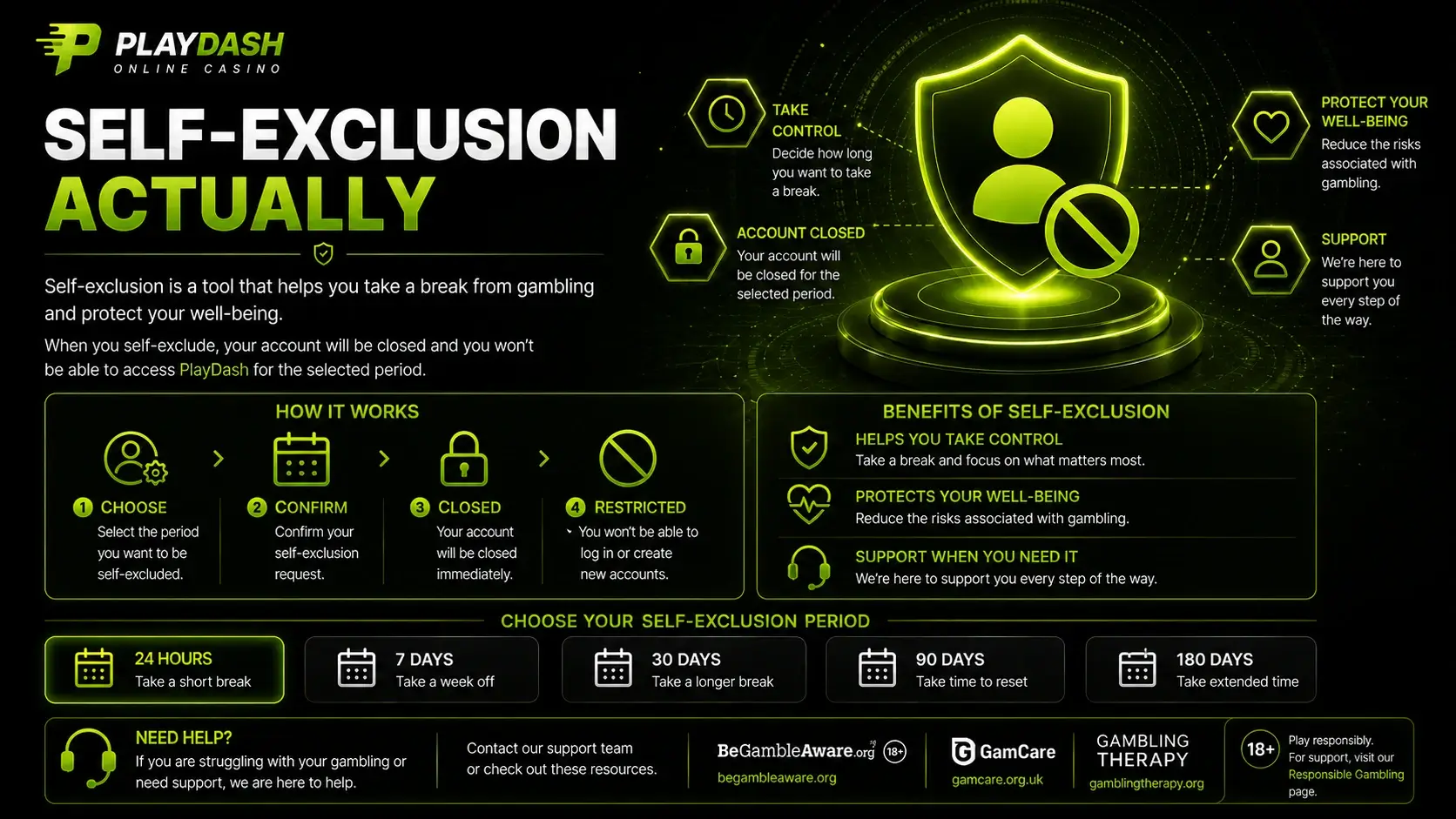
Self-exclusion closes the key actions on an account. The detail is below.
Wagering, Top-Ups, and Fresh Accounts Freeze
For the period of the exclusion, a set of things stops:
- Betting on the account
- Deposits and top-ups
- Opening a new account to get around it
The purpose is to break the cycle of play in a real way, not just to pause a screen. The block on new registrations is part of that — without it, the tool would lose its point, since a second profile would undo it.
| Element | During self-exclusion |
| Betting | Blocked for the whole period |
| Deposits | Blocked for the whole period |
| New accounts | Cannot be opened |
| Return after the period | On the company’s terms |
Requesting a Break and Choosing Its Length
The player starts a self-exclusion and picks the length. The detail is below.
Where to Ask and How Long to Set It
A request is made through the operator’s support or form, and the player chooses how long the pause runs. Before an account is closed, final settlement is done on any open bets and balance. The exact lengths and options sit with the operator, so it is worth confirming them when the request goes in rather than assuming a particular figure.
- Send the request through operator support
- Choose the length of the break
- Expect final settlement on open bets and balance first
The Rule You Cannot Reverse Midway
Put honestly, and as a strength — a self-exclusion period cannot be shortened once it has begun. That is a deliberate protection against an impulsive return in a weak moment, and the whole effect of the tool rests on it. Early cancellation is not offered; the period runs to its end. A return afterward is on the company’s terms. Choosing a length with room to spare beats picking the shortest one, since the point of the tool is to hold on a day when you would rather it did not.
| Who starts it | What it means |
| The player | A chosen break, requested through support |
| The operator | A restriction on signs of risk or a breach |
| Either way | No early cancellation; return on the company’s terms |
When the Operator Excludes an Account Itself
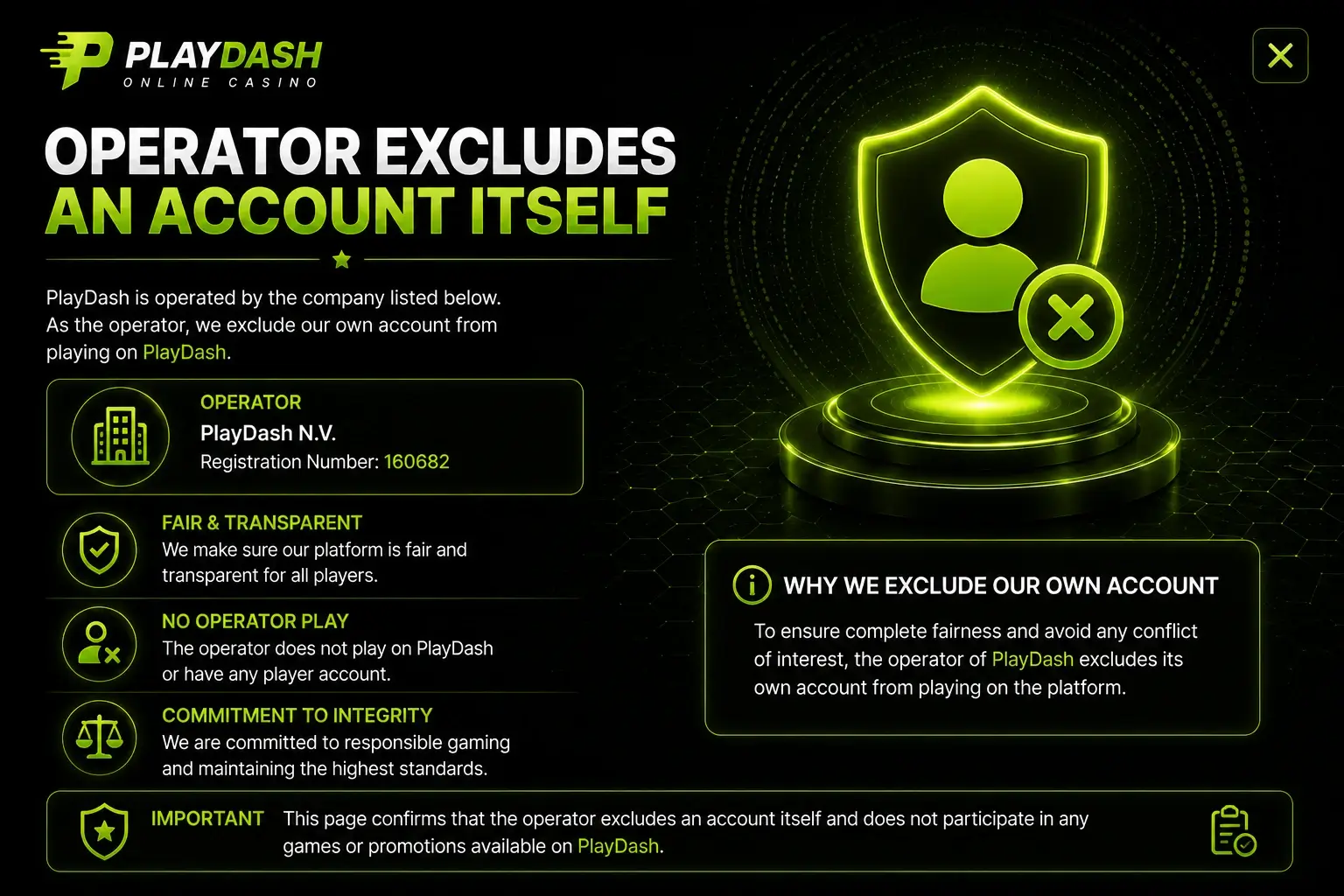
An exclusion can come from the operator, not only from the player. The two points below explain that.
The Operator Can Lock an Account Unasked
Under its terms, the operator may restrict or close an account on signs of problem play or on a breach, even without a request from the player. Put plainly, this is part of the operator’s responsible-gaming duties, not an arbitrary act. It is meant as a safety measure, and it is worth understanding in that light. The trigger is usually a pattern rather than a single session — repeated losses, or a distressed message to support — and the response is a conversation about limits before a harder restriction.
Whether You Return Is Up to the Company
After a self-exclusion, a return or a fresh login is at the company’s discretion and follows settlement, with no automatic restoration. That is deliberate too, since it lowers the risk of a hasty return the moment a period ends. The question is handled through support rather than by a switch flipping on its own.
What Stays Unclear Until You Ask
Some details are not spelled out publicly, and it is fairer to name the gap than to fill it with a guess. The detail is below.
If the Account Remains Open During the Pause
It is not always clear from public material whether access to the account — history, support — stays open during the pause, or what happens to any active bonuses. Those points are worth confirming with the operator before the request goes in, rather than after. This resource does not invent the exact rules, and it takes no part in the procedure.
- Ask whether the cabinet stays reachable during the period
- Ask what happens to any active bonuses
- Settle both before the request, not after
Getting Support Through the Time-Out
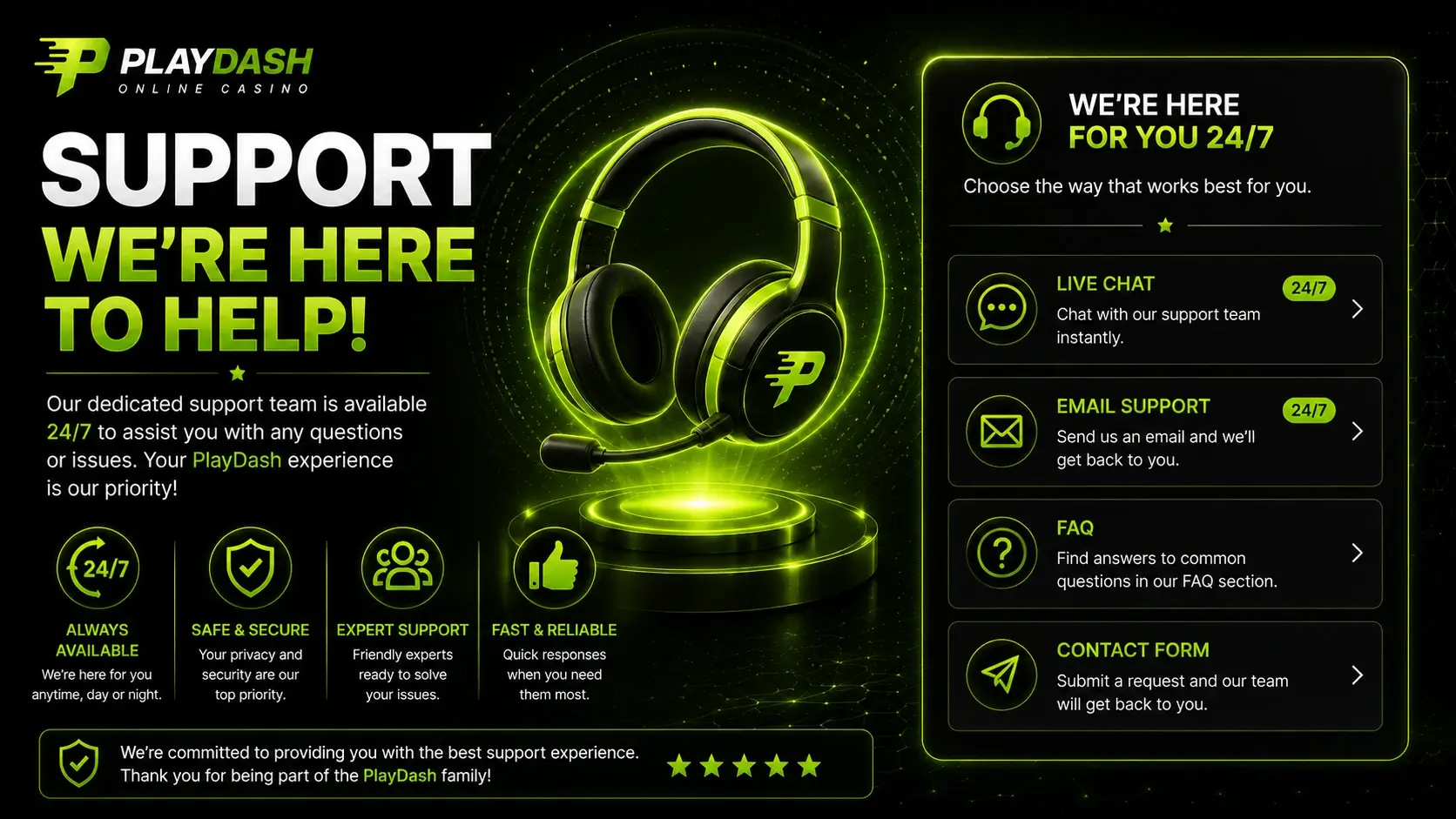
A pause is a good moment to reach for support. Some independent organisations offer free, anonymous help for gambling problems — Gamblers Anonymous (gamblersanonymous.org.uk) and Gambling Therapy (gamblingtherapy.org) — and a current local helpline is worth checking for too. Telling one person close to you is often an easier first step than a call to a service. Self-exclusion is a strong and respected move, not a defeat. Taking it once, with room to spare, and using the pause to reach for outside support is how the tool does its work. This resource is here to help with information, while the official terms sit on the PlayDash site, and the reminders hold — the audience is 18 and over, and gambling can become addictive.