
Noticing When Play Stops Being Fun
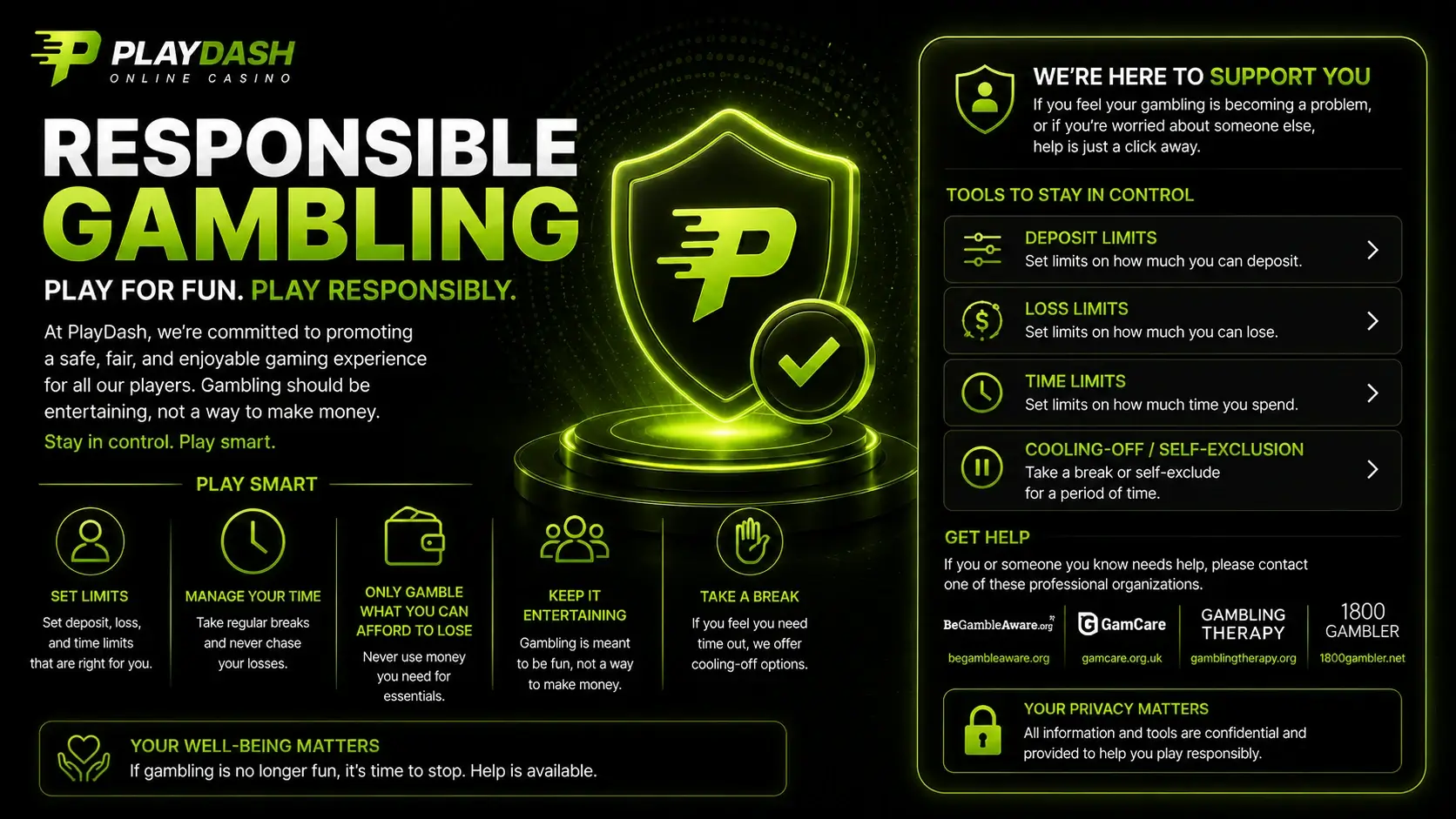
The first signs of a problem show up in money, time, mood and secrecy. The two points below help catch them early.
Red Flags Showing Up in Your Spending
Money is the plainest signal, so it is worth watching as a simple checklist:
- Bets creeping upward
- Deposits coming more often
- Playing with borrowed money
- Trying to win back a loss straight away
- Spending beyond what was planned
None of this is about blame. It is a list to check yourself against, honestly, every so often.
Red Flags in Time, Mood, and Hiding It
The non-money signs sit alongside those. Sessions run longer than meant, sleep and tasks suffer, irritation and anxiety or guilt show up before and after playing, and the subject gets hidden from people close to you. One episode proves little; the combination of these signs, holding over time, is what matters. A fair check is to compare the time you meant to spend with the time you actually spent over the last week.
| Signal area | What to watch |
| Money | Rising bets, frequent deposits, chasing losses |
| Time | Sessions overrunning, sleep and tasks slipping |
| Mood | Irritation, anxiety or guilt around play |
| Secrecy | Hiding the subject from people close to you |
Setting Your Own Limits Before You Play
Control is easier when the boundaries are set in advance rather than mid-session. The two points below cover the budget and the operator’s own tools.
Fixing a Budget Before You Start
The practical habit is to decide, before a session, on an amount you would not mind losing, then hold to it:
- Set the amount before you start
- Do not exceed it and do not top it up mid-session
- Treat the spend as the price of entertainment, not an investment
A budget set in advance holds firmer, because emotion enters during play and quietly moves the line.
Deposit Limits and a Short Cooling-Off
PlayDash provides responsible-gambling tools — deposit limits, set in the profile, a cooling-off period, and self-limitation features. Each fits a different moment. A deposit limit is for steady discipline, while a cooling-off period is for the point when a session feels like it has run away from you. Both are set in the account.
| Tool | What it is for | Where to set it |
| Budget rule | Personal discipline before play | On your own, in advance |
| Deposit limit | A ceiling on top-ups | In the account profile |
| Cooling-off | A short pause to reset | In the account |
| Self-exclusion | A fixed break from play | Through operator support |
Taking a Fixed Break From Play
When limits are not enough, self-exclusion sets a break for a chosen period. The two points below cover how it works and why it holds.
Asking for a Time-Out and What It Locks
A self-exclusion is requested through the operator’s support or form. For the period, it blocks betting, deposits and, as a rule, the creation of new accounts. Access to some sections may differ, and the exact terms sit with the operator, so they are worth confirming before the request.
Why Full Exclusion Only Goes One Way
An honest point, and a strength rather than a limit — a self-exclusion period cannot be shortened once it has begun. That is a deliberate protection against an impulsive return in a weak moment. A return after the period ends is on the company’s terms. The dedicated Self-Exclusion page has the detail.
When PlayDash Acts Before You Do
Under its terms, the operator may flag signs of risk itself — regular losses, or distressed contacts to support — and open a conversation about self-limitation or restrict an account. Put plainly, this is part of the operator’s responsible-gaming duties, not a punishment. Knowing it exists in advance is better than meeting it as a surprise, and it is worth reading as a safety net rather than a threat — the same watchfulness a responsible operator is expected to show.
Finding Support Beyond the Casino Itself
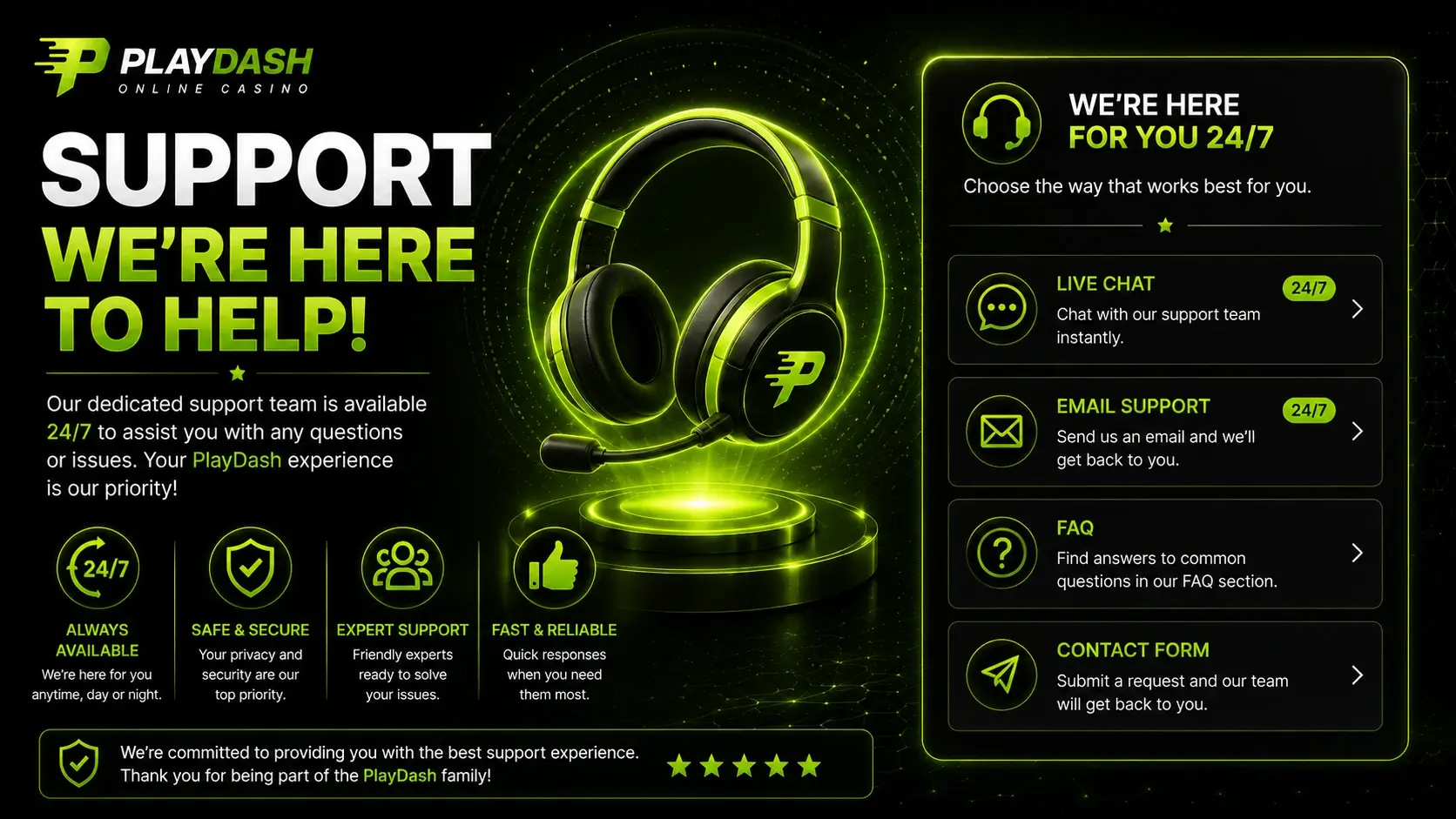
When control starts to slip, help from outside the casino matters. The two points below cover where to look and a first small step.
Independent Help Groups to Keep in Mind
Some independent organisations offer free, anonymous support for gambling problems:
- Gamblers Anonymous (gamblersanonymous.org.uk)
- Gambling Therapy (gamblingtherapy.org)
It is also worth checking for a current local helpline in your own country. None of these promises a cure, but each offers a real place to start.
Confiding in Someone Close as a First Move
Telling one person close to you is often easier and more effective than calling a helpline straight away. It breaks the isolation and the secrecy that usually make things worse, and it brings an outside eye onto the budget at once. It is a small, concrete step, and a good one to take before the problem grows.